Premier League Analysis: Becoming the Competition Revolution
The Premier League showed remarkable competitiveness last season. The article analyzes whether this trend will continue in the current season.
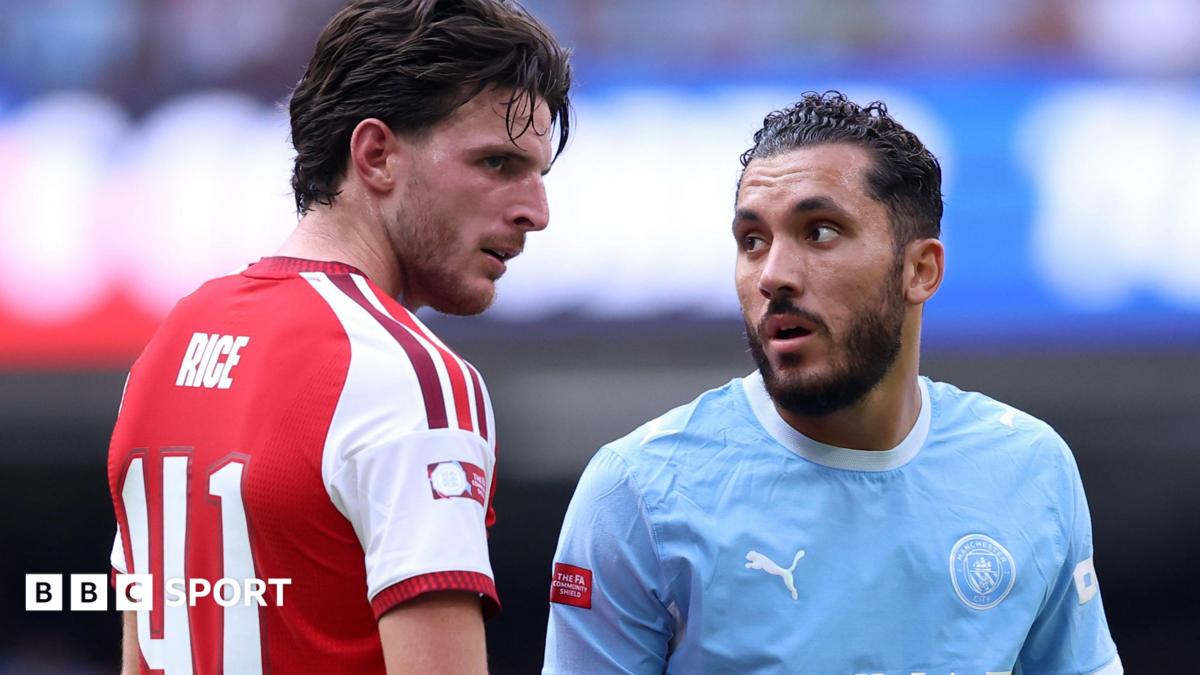
Analysis of the Premier League: Will the competition revolution
According to Bbc.
Background
Aston Villa performed strongly last season and achieved Champions League qualification, underlining the club's rise in the Premier League. This development could affect the club's ambitions for the coming season as they look to assert themselves in European competition.
Why this is important
The competitiveness of the Premier League reached new heights last season, increasing the league's appeal for fans and players. The reduced gap between the top teams and the relegation candidates suggests that more teams can compete for European places, changing the entire dynamic of the league. This development could have long-term implications for Premier League clubs' season forecasts and strategies.
Key findings
- Analysis of the Premier League: Will be the competition revolution.
- The Premier League showed remarkable competitiveness last season.
- Premier League data analysis: Will last season's competitive revolution continue? - BBC Sport.
The question of whether the Premier League was so competitive in the 2025-26 season because the quality of the "weaker" teams improved or the top teams became weaker is difficult to answer. Given the savvy smaller clubs like Brighton, Brentford and Bournemouth, the huge sums of money allowing even the bottom third of the table to sign the best talent from abroad, and the Premier League's current dominance of the Europa League and Conference League, it seems more likely to be the latter. However, the fact that promotion playoff winners Sunderland were placed above 13 teams in their first season back suggests the league may not have been as strong as we think.
What we do know, however, is that whether the top teams got weaker or their opponents got stronger, four of the seven teams that finished in the top seven in the 2024-25 season - champions Liverpool, Chelsea, Newcastle and Nottingham Forest - scored a total of 79 points fewer last season. While Forest's decline was not entirely unexpected given their incredible seventh-place finish in the 2024-25 season and trip to the Europa League semi-finals, the others' declines were far more surprising. Sunderland and Leeds broke the recent streak of promoted teams struggling to compete, scoring 64 points more than the teams they replaced in the Premier League. As such, this season will be a bit of a topsy-turvy one, with Bournemouth, Brighton and Sunderland having European competition to play, while Chelsea, Tottenham and Newcastle do not.
The question remains whether we will return to a more "traditional" order in the 2026-27 season or whether we will truly enter a new, highly competitive era of the Premier League. However, one area where the Premier League has become less competitive - probably because it has become more competitive overall - is at the lower end. It's almost expected that one of the teams will be left behind well before the end of the season, but these days two teams are being left behind. The average points score for the second-to-last team in a 38-game season is 31, meaning the teams that finish there have typically been in a relegation battle the entire season before ultimately falling. Since the Premier League was reduced to 20 teams, only two 19th-place finishers have scored fewer than 30 points in the first 21 seasons. However, over the last decade, seven of the ten teams that finished in this position failed to do so. In fact, in the last two seasons, newly promoted Ipswich and Burnley have finished there with just 22 points - the lowest ever achieved by a second-to-bottom team. Relegation battles are now mostly a competition to see who takes the final spot in the bottom three, while the other two are often decided long before the final match day - often by promoted teams. But inspired by the survival of Sunderland and Leeds, promoted teams Coventry City, Ipswich Town and Hu hope
ll City that they can reach Premier League competitiveness this season.
What happens next
The coming games will be crucial to see whether the trend of competitiveness continues. Clubs like Aston Villa who have qualified for the Champions League will need to confirm their form, while other teams will look to move up the table. The season will show whether the league remains as exciting and whether the 'have-nots' are able to challenge the 'have-nots'.
Frequently asked questions
How did the game between Arsenal and Aston Villa end?
The exact results of the match between Arsenal and Aston Villa are not specified in the article.
How does the last season affect the Premier League table?
Last season, the gap between the top four and bottom three narrowed to just 26 points, which is the smallest gap in 23 years.
When will Arsenal next play in the Premier League?
The exact dates for Arsenal's next games are not mentioned in the article.
How many points did Aston Villa have last season?
Aston Villa had one point less than the previous season but finished in seventh place.
Which teams qualified for the Champions League last season?
Aston Villa secured Champions League qualification ification, while Liverpool took the 'bonus' Champions League place.
Related articles
Häufig gestellte Fragen
- How did the match between Arsenal and Aston Villa end?
- The exact results of the match between Arsenal and Aston Villa are not specified in the article.
- How does last season affect the Premier League table?
- Last season, the gap between the top four and bottom three narrowed to just 26 points, the smallest gap in 23 years.
- When will Arsenal next play in the Premier League?
- The exact dates for Arsenal's next games are not mentioned in the article.
- How many points did Aston Villa have last season?
- Aston Villa had one point less than the previous season but finished in seventh place.
- Which teams qualified for the Champions League last season?
- Aston Villa secured Champions League qualification, while Liverpool took the 'bonus' Champions League place.
- What is the next fixture to watch?
- Fans should follow the involved clubs' upcoming schedules as coaches react to this result in their preparation.
More News

Leweling overcomes Oblak's obstacle after one
In Atlético Madrid's game against VfB Stuttgart on October 20, a decisive moment occurred: a mistake by Marc Pubill opened the door for goalscorer Leweling, who scored the goal and was able to overcome Jan Oblak.

Julián scores for Atlético Madrid after 185 days
Julián scored in the Champions League after 185 days without scoring, showing that he is back. The game was the perfect setting for his comeback.

1-1: Rayo Vallecano cannot play against Resiliencia FC
In an exciting game, Rayo Vallecano drew 1-1 with Resiliencia FC. The encounter highlights the topic of resilience in football and the competitiveness of teams.