The 500 year old family who hold the secret of the balloon
The Mellerio family, owners of the world's oldest jewelry house, are keeping the secret about the identity of the Ballon d'Or winner before the award is announced.
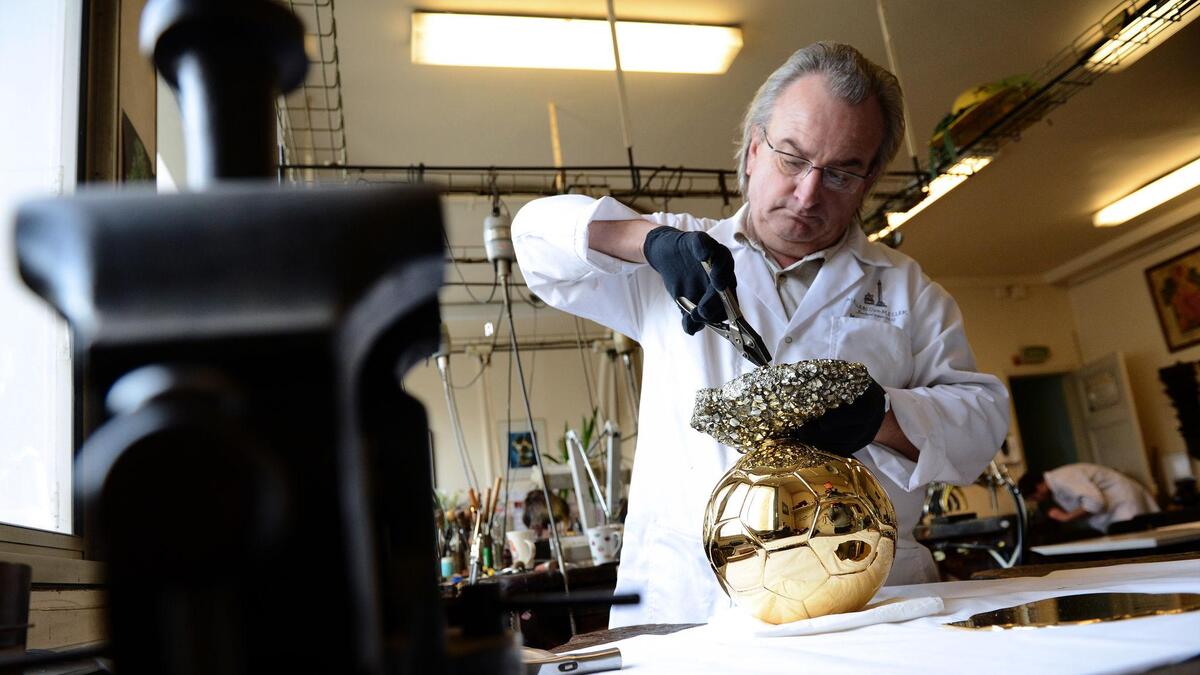
The 500 year old family who hold the secret of the balloon
According to Vnexpress.
Background
Lionel Messi, who has won the Ballon d'Or multiple times in the past, could be in the running again, cementing his position as one of the greatest players in football history. The Mellerio family, which is responsible for producing the Ballon d'Or, has a unique insight into the selection processes, fueling debate about the award's fairness and influence on the careers of players such as Cristiano Ronaldo and Ousmane Dembélé.
Why this is important
The Mellerio family's secrecy about the identity of the Ballon d'Or winner underlines the importance of this award in football. Lionel Messi, a multiple winner, could be in the spotlight again, fueling discussion about his career and his influence on sports history. The anticipation of the winner being announced also has an impact on the season predictions for players such as Ousmane Dembélé and Aitana Bonmatí, who are also in the spotlight.
Key findings
- The 500 year old family who hold the secret of the balloon.
- The Mellerio family, owners of the oldest jewelry house in the world, are keeping the secret about the identity of the Ballon d'Or winner before the award is announced.
- Gia tộc 500 năm tuổi nắm giữ bí mật Quả Bóng Vàng.
The Mellerio family, owners of the world's oldest jewelry house, keep one of football's biggest secrets: the identity of the Ballon d'Or winner before the award is announced. "I have four children who love football very much, so I am under a lot of pressure," Laure-Isabelle Mellerio told FranceInfo when asked why she was keeping the winner's identity secret. "But no, it's a question of the company's reputation. I won't reveal that name." Laure-Isabelle is at the helm of Mellerio, the well-known jewelry house located at 9, Rue de la Paix, Paris, near Place Vendôme. She took over the company after her husband Laurent Mellerio, the 14th generation of the family, died. Each year, Mellerio is responsible for crafting the Ballon d'Or, the most prestigious individual award in football. This work also gives the family a rare privilege: they find out in advance which player will be honored, while millions of fans around the world have to wait until the awards ceremony. 100 hours of craftsmanship, six months of production. The Ballon d'Or is not just a sports award. It is a work of art made using artisanal techniques that are traditional and combine copper, silver, gold and pyrite stones. Unlike the ball used on the field, which is made of leather and stitching, the ball
on d'Or formed from metals, fire and the blows of craftsmen. Instead of a symbol of a sporting goods manufacturer, the piece bears the French inscription "Meilleur joueur du monde", which means "Best player in the world". To complete such a prize, a craftsman requires approximately 100 hours of craftsmanship, spread over a total preparation and manufacturing process of six months. This year's Ballon d'Or is the 70th prize made in the Mellerio workshop. Like the first prize presented in 1956, this year the award will be presented in Great Britain, at the London Palladium. The event is also an opportunity to remember Stanley Matthews, the first player to receive the Ballon d'Or. The former England footballer won the award in 1956 at a small ceremony at Blackpool Town Hall, from the hands of journalist Gabriel Hanot, who played an important role in the award's establishment. The trophy Matthews received back then was significantly smaller than today's version. Although the Ballon d'Or continues to be manufactured by Mellerio, the award has undergone many changes over the years in terms of size, materials and manufacturing processes. A common misconception is that the price is made entirely of pure gold. Laure-Isabelle emphasizes that this is not the case. The manufacturing process begins with two half shells
Copper. The artisans use Bunsen burners, high temperatures and artisanal techniques to shape the bodies of the cup. "The metals are heated until they take on a red color, corresponding to that of ripe cherries," explained engraver Jean-Pierre Cottet-Dubreuil in an introductory video about the manufacturing process. After the half-shells have taken on the desired shape, they are assembled using a silver soldering technique. The body is then dipped in a mild acid solution to remove solder residue before being sanded and polished. With the help of a chisel and hammer, the characteristic bumps on the surface of the cup are created, mimicking the patches on the surface of a football. The next step is gold plating, where a layer of pure gold is applied to the metal surface. Finally, the ball is placed on a base made of pyrite, a mineral substance with a metallic sheen. This base is selected by Mellerio experts and shaped individually for each trophy. It is precisely this base that ensures that every Ballon d'Or is unique. "The pyrite base ensures that the weight of the Ballon d'Or varies from year to year. A full prize weighs around 10 to 12 kilograms," said Cottet-Dubreuil. "The pyrite pieces are not identical, so there are no two identical Ballon d'Or. If you look at the bases of Messi's trophies, you can see that they are different
"A secret is hidden by a piece of metal. The final and most sensitive step in the manufacturing process is the engraving of the winner's name. After the body and base of the cup are completed, the prize is handed over to a craftsman who specializes in engraving. He will receive information about the player who will be awarded even before France Football officially announces it. "The engraver is the lucky person who gets to know the name of the winner before anyone else," said Cottet-Dubreuil. Next to the player's name, the year of the award, the Ballon d'Or symbol and the France Football logo are engraved. But how will this secret be kept when the trophy is finished and brought to the stage? Mellerio uses a simple but effective solution: a small piece of metal that covers the place where the winner's name is engraved in the photos of Aitana Bonmati or Ousmane Dembélé taken last year, a small detail can be seen that appears in the place where the player's name will later be visible. This is the piece that serves to protect the most important secret of the event. Only when the winner is officially announced and the prize is presented, this is an important aspect for France Football to ensure the surprise of the award ceremony
ren. For Mellerio, however, it is a question of reputation that has been built up over centuries and a question of reputation that must be maintained. From Marie Antoinette's jewelry to the Ballon d'Or. Mellerio's story begins in 1515, when the family left the Vigezzo Valley in northern Italy and settled in Paris. About a century later, Queen Marie de Médicis granted the family the right to make jewelry as a kind of thank you for preventing a plot against her son, the young King Louis XIII. This episode marked the beginning of a relationship that spanned more than 400 years between the Mellerio family and the French royal family and the European nobility. During the time of Queen Marie Antoinette, the company gained even greater recognition. She loved the jewelry and small statues made in the Mellerio dits Meller workshop and often gave them as gifts to guests visiting the Palace of Versailles. The family also maintained a close relationship with the Bonaparte family. In 1815, François Mellerio opened a shop on Rue de la Paix, exactly where the company still operates today. The customer base grew, and among them was the French Empress Joséphine. The relationship with the royal family and the European nobility, which was shaken by political upheavals in 1848, led the family to found a two
office in Madrid. There, Mellerio received many orders from the Spanish royal family, most famously the Mellerio tiara that Queen Isabella II gave to her daughter Isabel de Borbón, nicknamed "La Chata." This piece is still part of the Spanish royal family's jewelry inventory today. In 2007, Queen Sofía lent Princess Letizia a tiara for an official visit by the Queen of the Philippines. Mellerio's history, now spanning over 500 years, has transformed from jeweler to royalty to a company linked to the world's most prestigious sporting awards. Nadal and the privilege that Roland Garros gave him. If Lionel Messi or Cristiano Ronaldo are the names associated with the Ballon d'Or, Rafael Nadal has a special connection to another of Mellerio's prizes: the Coupe des Mousquetaires, the trophy for winning the singles at Roland Garros. Mellerio has been responsible for the production of this trophy since 1981. Nadal has won the title in Paris 14 times, more than any other player in the tournament's history. However, the winner of the tournament does not get to take home the original trophy. Players will only be allowed to use the trophy for a short time to celebrate or take photos before the object is returned to the storage location of the President of the French Tennis Federation. However, in 2017, Nadal received special dispensation. After
After his tenth victory at Roland Garros, the Spanish player was able to take home an identical trophy, i.e. a second trophy. This approval was an exception and was unique to date, as the second cup was allowed to leave another storage location. This exception marked an unprecedented success for Nadal and showed the close connection between Mellerio and the sports legends. Throughout history, the company's works have had a place in the possession of members of the royal families of Europe, as well as athletes such as Messi, Putellas or other football stars. Two more players will be added to Mellerio's list of honorees at this year's Ballon d'Or ceremony. For the over 500-year-old family of jewelers, the price is not just of material value. It is also a symbol that connects traditional craftsmanship with the history of football, with each name engraved on the metal also representing a milestone in that player's career. And before the whole world finds out who will be honored, this secret is kept in the small jewelry store in the heart of Paris.
What happens next
The upcoming Ballon d'Or awards ceremony is highly anticipated, especially given the possibility that Lionel Messi will be honored again. The Mellerios will continue to maintain secrecy until the winner is officially announced, which is the Fueling anticipation and speculation in the football world. Fans and pundits will closely monitor the impact of this award on the seasons and careers of the nominated players.
Frequently asked questions
Who is the current Ballon d'Or winner?
The identity of the Ballon d'Or winner will be kept secret by the Mellerio family until the award is announced.
How long does it take to make the Ballon d'Or?
The production of the Ballon d'Or takes approximately six months and requires 100 hours of craftsmanship.
Where is the Mellerio jewelry store located?
The Mellerio jewelry house is located at 9, Rue de la Paix, Paris, near Place Vendôme.
What materials are used for the Ballon d'Or?
The Ballon d'Or is made of copper, silver, gold and pyrite stones.
What makes the Ballon d'Or a work of art?
The Ballon d'Or is a work of art as it is made using traditional artisan techniques and is not just a sports award.
Related articles
Häufig gestellte Fragen
- Who is the current Ballon d'Or winner?
- The identity of the Ballon d'Or winner will be kept secret by the Mellerio family until the award is announced.
- How long does it take to make the Ballon d'Or?
- The Ballon d'Or takes approximately six months to make and requires 100 hours of craftsmanship.
- Where is the Mellerio Jewelery House located?
- The Mellerio jewelry house is located at 9, Rue de la Paix, Paris, near Place Vendôme.
- What materials are used for the Ballon d'Or?
- The Ballon d'Or is made of copper, silver, gold and pyrite stones.
- What makes the Ballon d'Or a work of art?
- The Ballon d'Or is a work of art as it is made using traditional artisan techniques and is not just a sports award.
- What is the next fixture to watch?
- Fans should follow the involved clubs' upcoming schedules as coaches react to this result in their preparation.
More News
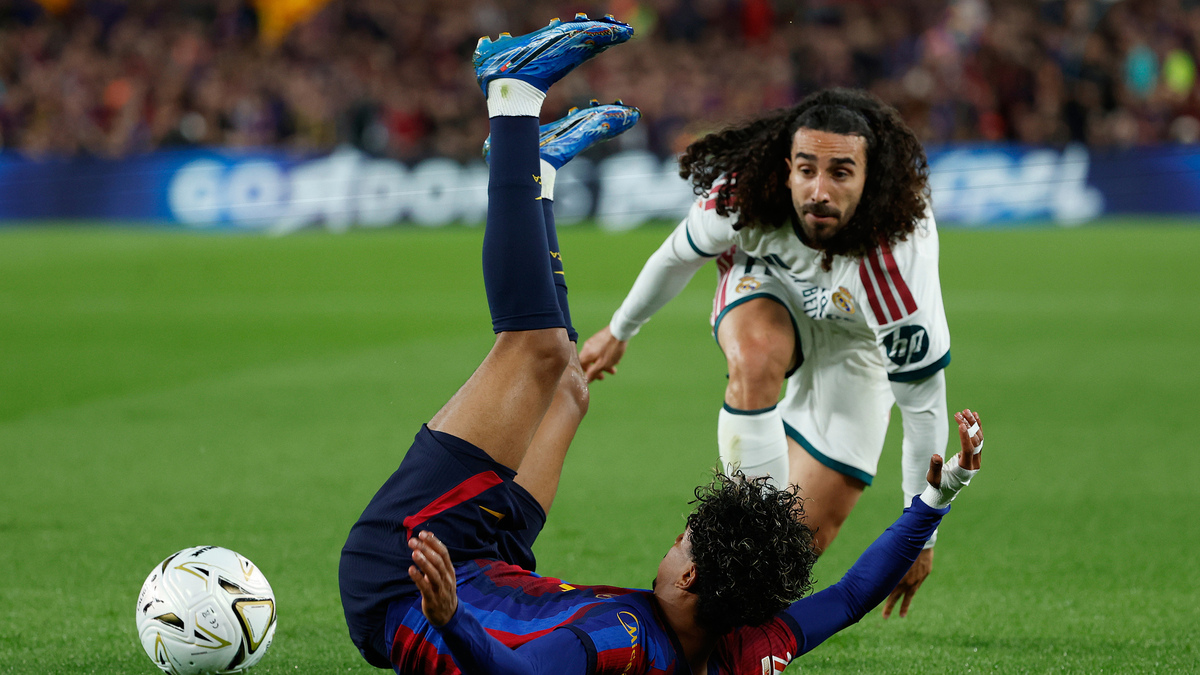
Cucurella dominates Yamal in El Clasico
Marc Cucurella put in an outstanding performance in El Clasico, largely neutralizing Lamine Yamal and contributing decisively to Real Madrid's 2-1 win over Barcelona.

Cristiano Ronaldo overtakes Lionel Messi in the historic
Cristiano Ronaldo leads Lionel Messi, who has 450 points, with 460 points in the historical Ballon d'Or rankings, based on an analysis of 69 awards from 1956 to 2025.

Manchester City: Can the players cope with the “noise”.
Manchester City suffered their first Premier League defeat of the season against Aston Villa. Coach Enzo Maresca was optimistic that his players can concentrate on the game and commented on the challenges posed by the opposing fans.