Champions LeagueJuly 3, 2026
Sandro Tonali: Newcastle United face major challenges due to departures
Newcastle United are facing significant difficulties as key players such as Sandro Tonali and Anthony Gordon leave the club, while financial regulations threaten their competitiveness in the Premier League.
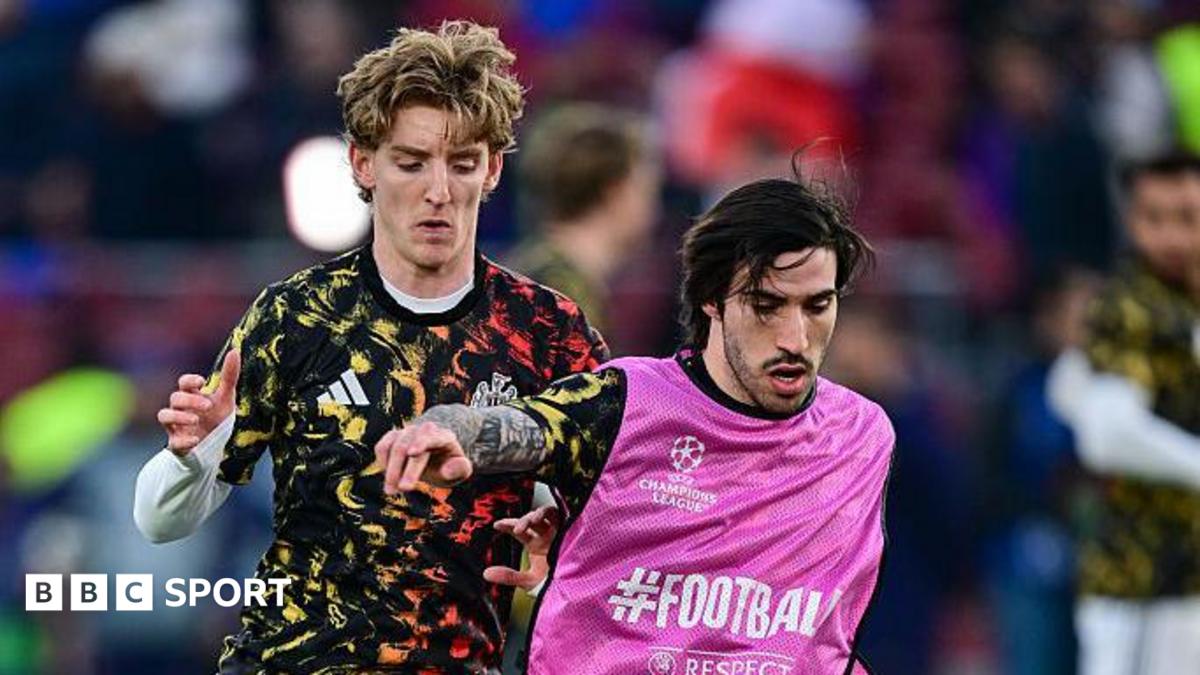
Elliot Anderson should always thrive. But when Newcastle United reluctantly sold the midfielder to Nottingham Forest to avoid breaching the Profit and Sustainability Rule (PSR) in 2024, club officials were still somewhat relieved that they had retained their established players. However, the team has changed significantly over the past 12 months, with several key players wanting to leave the club. Alexander Isak pushed to join Liverpool for a British record £125m. Anthony Gordon completed a £69m move to Barcelona before the transfer window opened. Sandro Tonali is close to a move to Tottenham in a deal said to be worth up to £100m. Should Newcastle's delayed move to a commercial model really cause any major surprises, particularly after a 12th-place finish in the Premier League last season? In theory, Newcastle could spend more within the rules as there is a higher threshold for clubs not playing in Europe. But the club was never prepared to violate UEFA's requirements. Newcastle made it clear this week that they are "committed to full ongoing compliance" as part of a settlement with UEFA following a breach of financial sustainability rules. Fundraising through the sales of Gordon and Tonali was significant
of equal importance for significant reinvestment this summer. Newcastle on the wrong side of history It has previously been suggested externally that Newcastle could benefit from not participating in Europe. This is because the Premier League's separate cost regulations (SCR) allow clubs not participating in UEFA competitions to spend up to 85% of their football-related revenues as well as net profits/losses from player sales. In contrast, UEFA's rules limit spending for clubs playing in Europe to 70%. Yet senior executives at Newcastle warned that piling up huge losses in a single transfer window and creating an exorbitant team cost structure without having the revenue to support it would have devastating consequences. UEFA's rule on football revenue covers a three-year period, so should Newcastle spend particularly big in the summer and qualify for Europe, they would be at real risk of a breach as those bills would still need to be submitted. They would also have to somehow reduce their team costs to comply with UEFA's rules. Therefore, it was always important to be active in trading to create scope this summer, especially without the riches of the Champions League. Newcastle simply had to sell better. In 2024, senior club officials pointed out that Newcastle in the last three years
had only made £12 million profit from sales. The average of the top six clubs in the Premier League by revenue was £156m, while the other 13 clubs averaged over £60m. A lot has happened at Newcastle since then, but now the club faces the loss of three key players in just a few months. Rebuilding while closing the revenue gap will be a real challenge for Newcastle, who appear to have made progress in signing 20-year-old Ivorian winger Bazoumana Toure from Hoffenheim. The club certainly cannot afford a repeat of the brutal summer of transfers when, apart from defender Malick Thiaw, they saw little immediate return from a net transfer outlay of over £100m. “Newcastle are clearly on the wrong side of history,” said football finance expert Kieran Maguire. "Chelsea didn't have that under Roman Abramovich. Manchester City didn't have that under Sheikh Mansour because there were no PSR and SCR restrictions back then. These clubs could afford to lose as much as they wanted as long as the owners were happy with it, knowing that they could buy a player and get rid of him if it didn't work, or just keep him out on very high salaries. They could then buy a replacement and hopefully it would work the second time around
ionize. Why Premier League clubs could end up in a penalty spiral with Uefa When the Premier League adopted the new financial rules, Uefa was immediately concerned. The other top European leagues have agreed to UEFA's 70% rules or operate a similar financial regulation process. The Premier League's expenses rule, which came into effect on Wednesday, allows teams not in Europe to spend up to 85% of their revenue and potentially up to 115% with a negligible fine. UEFA fears this could lead to inflation in the transfer market. English clubs with larger budgets, thanks to large TV rights deals, could spend even more money on transfers. European clubs would have to spend more to keep their own players and sign others. This particularly affects midfield clubs such as Everton, Fulham and Leeds United. They have the financial power to easily compete for players with clubs like AC Milan, Borussia Dortmund and Juventus. There is another side effect that UEFA highlighted. Imagine a Premier League club qualifying for Europe in the 2026-27 season while operating at the Premier League's 85% cost regime, or possibly higher. The club will then have to comply with UEFA's 70% rule for the 2027-28 season. But UEFA evaluates the numbers based on the calendar year. For the 2027-28 season, the year will be 2027. A club must
So he might exceed the 70% limit while he may have been working at 85% in the first half of the year. After spending heavily to qualify for Europe, he would then have to spend money to play in Europe. Indeed, Premier League clubs could be caught in a penalty spiral as various teams qualify for Europe. Only the clubs with huge commercial income, such as Manchester United and Tottenham, would have no problems switching between competitions because they can operate at 70% regardless of European participation. Crystal Palace put up the numbers last season, while Newcastle and Nottingham Forest, the other two clubs without European football in the 2024-25 season, failed to do so. Bournemouth, with limited commercial revenue from a stadium that seats around 11,000 spectators, could be struggling in 12 months. Brighton and Sunderland also have to comply with UEFA's regulations for the first time and not those of the Premier League. English clubs were already having significant problems. Over the past two years, Uefa has handed out a total of €158m (£136m) in fines, of which €99m (£85m) has been suspended and is linked to future compliance. Aston Villa and Chelsea account for the bulk of Uefa's penalties and Villa are finding it extremely difficult to meet the demands. Despite participating in Europe in
In the last three seasons - and one of them in the Champions League - Villa was proven to have a "significant breach" in 2025. They had already been under a compliance agreement since 2024. Newcastle's problem is twofold: they have breached UEFA's football revenue rule - a three-year assessment similar to the profit and sustainability rule - and also the 70% limit. How can Newcastle hope to make up ground in the race against the top clubs when they can only spend 70% of their income when they are not in Europe? It's sensible, but it represents a competitive advantage for clubs who would be willing to spend a higher percentage. Not only will Newcastle fall behind Arsenal, Liverpool and Manchester United, but other clubs could also start to compete for transfer targets by investing more of their income into their squads.
🔗 Related Articles
More News
Spieler
Van Dijk praises Klopp ahead of the duel against Germany
Virgil van Dijk praises Jürgen Klopp as he prepares for the match between the Netherlands and Germany.
Sep 25, 2026Read
Bove announces new documentary about cardiac arrest and
Edoardo Bove, the Italian midfielder, has announced a documentary film titled 'In Un Battito', documenting his dramatic journey after a cardiac arrest and his return to the pitch.
Sep 25, 2026Read
Fiorentina loanee Mastantuono talks about integration
Franco Mastantuono reflects on his adjustment to Fiorentina's style of play and the challenges at the start of the season.
Sep 25, 2026Read