World Cup 2026: How soccer helped immigrants move into the
In Portland, Maine, immigrants and refugees have formed a community through soccer. The game helped them find their way in a foreign country.
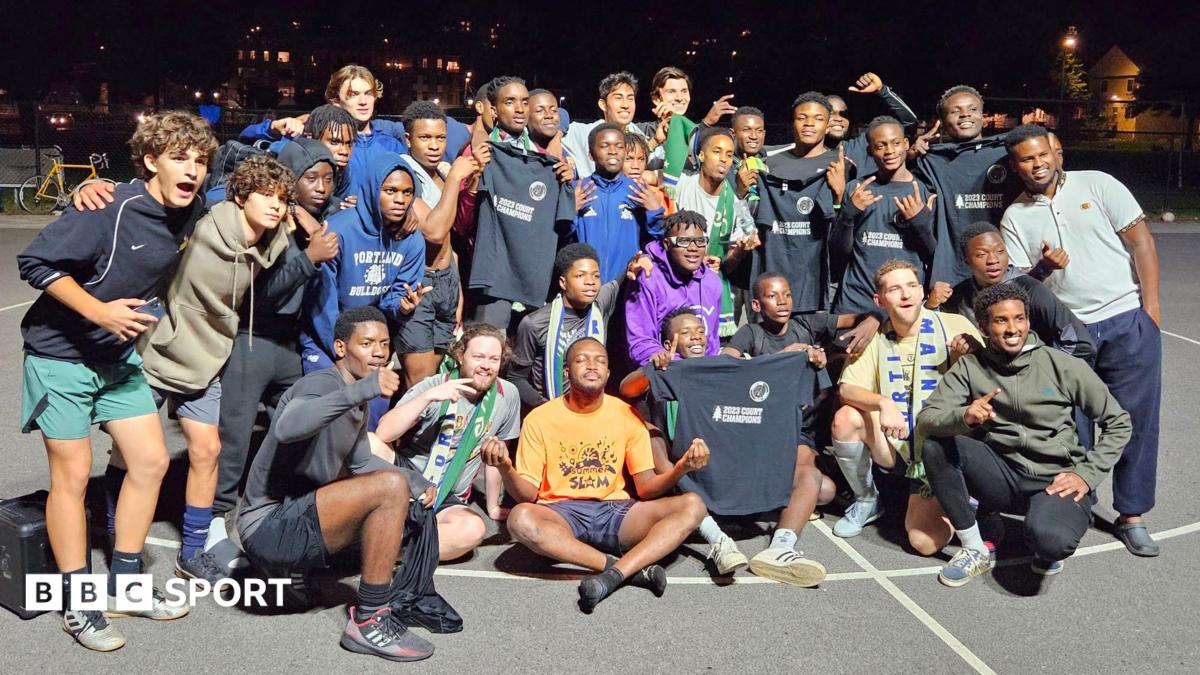
World Cup 2026: How football helped immigrants get into the
Why this is important
The story of George Lusolo illustrates how football acts as a unifying element for immigrants and refugees. In Portland, Maine, sports help people navigate new environments and form communities. These social bonds are particularly important in times of political uncertainty, which is reinforced by strict immigration policies.
Background
George Lusolo is a 19-year-old refugee from the Democratic Republic of Congo who has found a new home in the USA. His journey shows how football is not only a sport, but also a means of integration and community creation for immigrants. With other players like Deji Kuribanza and Joel Andre, he shares the passion for the game that helped him find his way in a foreign country.
Key findings
- World Cup 2026: How football helped immigrants get into the.
- In Portland, Maine, immigrants and refugees have formed a community through soccer.
- World Cup 2026: How football has helped immigrants make a home in the US - BBC Sport.
The power of the FIFA World Cup to unite people has once again been demonstrated in the ongoing tournaments. A soccer field in the northeastern United States is proving how the game can change lives — far away from the big stages. For the immigrants and refugees who play soccer irregularly in Kennedy Park in Portland, Maine, sport is the unifying element. But the bonds they have formed with each other have been put to the test since the political change in the USA. President Donald Trump's administration has pursued a strict immigration policy since the beginning of his second term in office. 19-year-old George Lusolo, who fled to the USA with his mother from the Democratic Republic of Congo five years ago, describes how football helped him find his way in a country that was foreign to him. "I didn't know the language, didn't know the people," he says. "I was just a child, so everything was very difficult for me and my mother." After spending time in a refugee home in Texas and another in New York, George ended up living in Portland. While his asylum application was being successfully processed there, he found out about an open soccer game in Kennedy Park via social media. “What really excited me was that there were people like me playing football in the park,” he says. "I came and played, it was really fun. "Football is my therapy. I've always played since
I was a child in Kinshasa. When you play with people who come from the same country as you and who have the same problems, it just feels good." What started in 2021 as an informal meeting of players on an asphalt pitch at Kennedy Park has now grown into a community where people from around 30 different countries share a love of soccer. 18-year-old Deji Kuribanza, who is also from the DR Congo but came to the USA via Angola, describes how they are influenced by the universal language of the "It's not necessary that everyone speaks the same language," says Deji. "You just have to point at the ball with your feet or another part of your body and want it. This is a really cool thing." Over the past year, immigrant communities in and around Portland have been rocked by U.S. Immigration and Customs Enforcement (ICE) raids. At least 400,000 people have been detained by ICE since January 2025, according to the Migration Policy Institute, an independent, nonpartisan organization that advocates for improving immigration and integration policies. The U.S. government says those arrested pose a threat to public safety and national security The Department of Homeland Security, which runs ICE, told the BBC that people who were in the country legally had "nothing to worry about."
But rights groups argue that the raids also target innocent people who pose no risk to society. That was also the case at Kennedy Park. "The players and their families were afraid to leave their homes since ICE spread such fear and terror," says Anthony Fiori, who coordinates the open games at Kennedy Park. "Students have missed weeks of school. "ICE brought a lot of fear to the community. They caused a lot of harm to the community." However, the football community responded and organized over 70 food deliveries to those who dared not go outside during the raids. The community also led a campaign to free 17-year-old Joel Andre, who is also attending the games at Kennedy Park, from custody. Joel was in ICE custody for four months, but his family is now also in the process of applying for asylum in a US court. The family's asylum application was initially rejected in the USA. They then traveled to Canada to apply for asylum, not knowing that there is an agreement between the two countries that allows you to choose only one of the two countries to apply for asylum. That agreement resulted in the family being detained by ICE. They are now fighting in a US court for the right to apply for asylum in the USA
may. While such legal problems still exist for the members of the open games at Kennedy Park, the question of whether they will even be recognized as players in the future is another issue. "I feel like some people only see immigrants as people who don't belong anywhere else and who come to their country and do nothing," says Deji. "There are a lot of Americans who see us, who just watch us in the park. They see that we are happy as immigrants, that we are talking, that we are having a good time. "I hope that gives them a different image of us." Anthony, who himself has a long family history in Maine, believes that the benefits of the community in Kennedy Park are obvious. "It's really special that people from such different cultural backgrounds, from different nationalities and from different generations can meet and be friends in one place," he says. "Especially in a state like Maine, which is not very diverse overall." The American dream may not look like what they had hoped. But some of them allow themselves to dream big when they think about the World Cup that will take place in the USA in 2026. "It's something I've never experienced before," says Deji
That's a wish of mine, that's a dream of mine." George also has the dream of one day playing professionally, for the DR Congo national team. The fact that the Leopards, as the Congolese national team is nicknamed, will be back at the upcoming World Cup after 50 years is a reason for joy for the players in Kennedy Park.
What happens next
It remains to be seen how the political situation in the USA will affect the Kennedy Park community. George Lusolo and other players could continue to resort to the football field to overcome their challenges and cement their identity in a new country. Unification through football could continue to play an important role in the integration of refugees in the future.
Frequently asked questions
What is the role of soccer for immigrants in the USA?
Soccer serves as a unifying force for immigrants and refugees playing in Portland, Maine's Kennedy Park, helping them navigate a foreign land.
Who is George Lusolo and what experiences has he had?
George Lusolo is a 19-year-old refugee from the Democratic Republic of Congo who fled to the USA with his mother five years ago and was able to forge social bonds through football.
Why is this topic relevant now?
The topic is relevant because the political changes Changes in the USA, particularly the strict immigration policy under President Donald Trump, are testing the bonds between immigrants and refugees.
What challenges do immigrants face in football?
Immigrants face challenges such as language barriers and feelings of isolation, but these can be alleviated through football.
What did George Lusolo say about his experiences in football?
George Lusolo describes football as his therapy and highlights that playing with people from similar backgrounds has helped him feel better.
Related articles
- Norway on the rise: The successful model is also impressing England
- World Cup 2026: How Belgium's golden generation has changed - Spain
- World Cup 2026: Kylian Mbappé's goals from various
- Lopes Cabral receives news from after his world-class goal
Häufig gestellte Fragen
- What is the role of soccer for immigrants in the USA?
- Soccer serves as a unifying force for immigrants and refugees playing in Portland, Maine's Kennedy Park, helping them navigate a foreign land.
- Who is George Lusolo and what experiences has he had?
- George Lusolo is a 19-year-old refugee from the Democratic Republic of Congo who fled to the United States with his mother five years ago and was able to forge social bonds through soccer.
- Why is the topic relevant now?
- The topic is relevant because political changes in the United States, particularly the strict immigration policies under President Donald Trump, are testing the bonds of immigrants and refugees.
- What challenges do immigrants face in football?
- Immigrants face challenges such as language barriers and feelings of isolation, but these can be alleviated through football.
- What did George Lusolo say about his experiences in football?
- George Lusolo describes football as his therapy and highlights that playing with people from similar backgrounds has helped him feel better.
- What happened in this story?
- World Cup 2026: How football helped immigrants, in the summarizes the main development covered in this report.
- Why is this news relevant right now?
- The timing matters for how clubs, players, and fans prepare for the next competitive phase in the season or transfer window.
More News
'RetroFútbol': A tribute to football video games
'RetroFútbol' is a book about the history of football video games that presents 100 defining titles and examines their development over five decades.

Xavi Hernández makes his debut as a Dutch coach
Xavi Hernández made his debut as coach of the Dutch national team today. The opening game against Germany brings with it major challenges.

Sheffield FC: BBC podcast gives insights into the "oldest
The 'Mud, Sweat and Cheers' podcast explores Sheffield FC's extraordinary season, highlighting the club's historical significance and current challenges.